
The PADMAN Framework: Executive Career Coaching for C-Suite Job Search Success
Several years ago, I found myself in the audience as one of my favorite colleagues, Elisabeth Sanders-Park, led a deep dive into her book, The Six Reasons You'll Get the Job. As I listened, it became clear that while the book is accessible to candidates at every level, its core framework—PADMAN—holds particular power for senior executives navigating the complex, high-stakes world of leadership transitions.
Make it stand out
Whatever it is, the way you tell your story online can make all the difference.
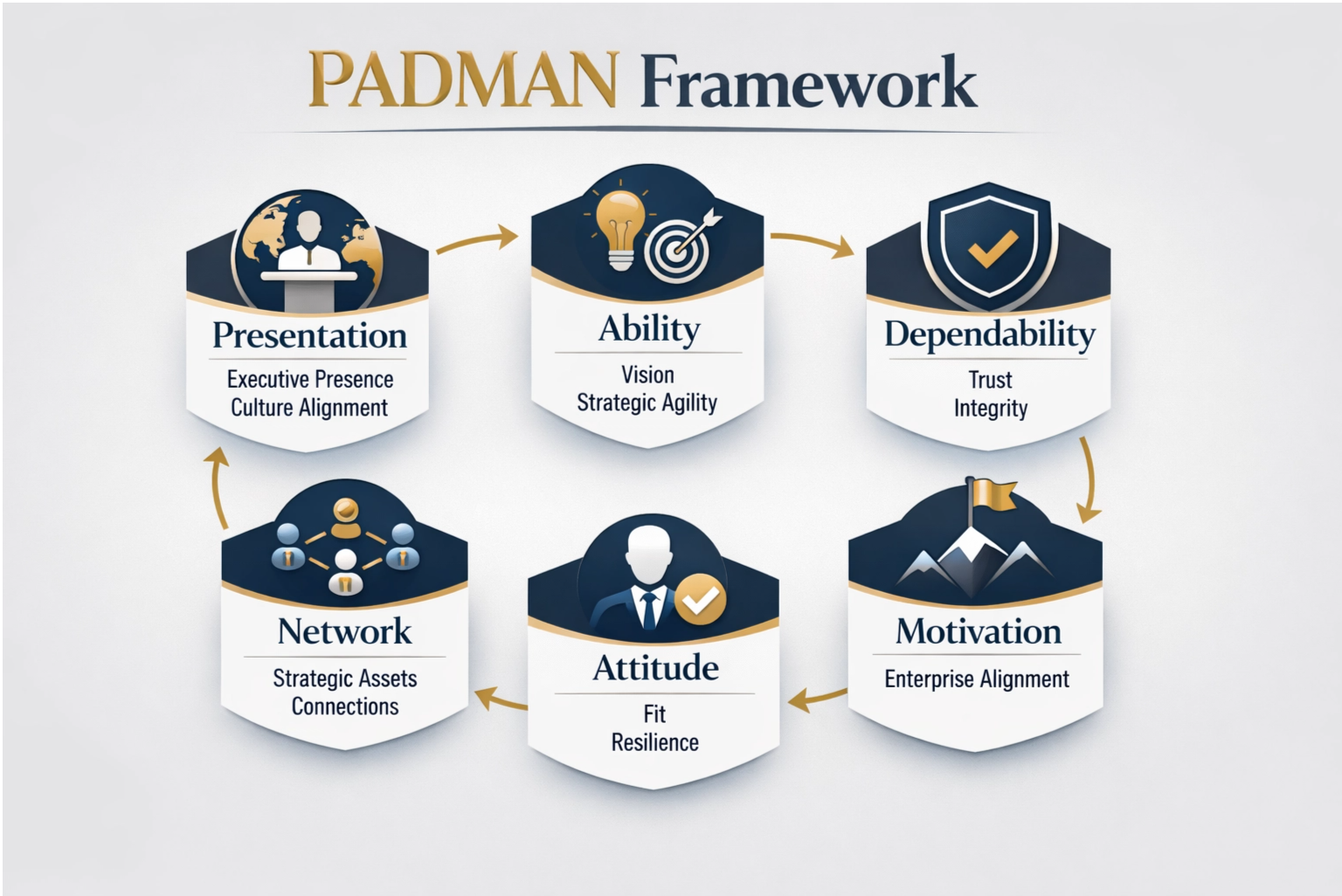
At the C-suite level, the fundamentals of landing a role do not change; they intensify. Every interaction, every decision, and every message is scrutinized through a sharper lens. Whether you are pursuing a CEO seat, a board position, or a portfolio career, the reason you will—or will not—receive the offer depends on six simple yet powerful concepts: Presentation, Ability, Dependability, Motivation, Attitude, and Network.
Presentation: Beyond the Interview Suit
For a senior executive, presentation is far more than attire. It is the sum total of your executive presence. You are being judged on whether you embody the company's image—not just its brand, but its culture, its values, and its future direction.
At a technology firm, a formal suit may signal rigidity rather than innovation. At a law firm or financial institution, a more traditional presentation may be expected. But the judgment goes deeper. Your communication style, your boardroom demeanor, your digital footprint, and even your thought leadership are all part of the package. The most successful executives target organizations whose image aligns authentically with their own. When the fit is genuine, presentation ceases to be performance and becomes presence.
Ability: The Price of Admission – and the Currency of Trust
For the senior executive, ability is the non-negotiable foundation upon which everything else is built. It is the price of admission to the conversation. Yet, at the C-suite level, the definition of "ability" shifts dramatically. It is no longer sufficient to demonstrate that you can perform a set of tasks or manage a function. Instead, you must prove that you possess the judgment, vision, and strategic agility to steward an entire enterprise—or a significant piece of one—through complexity and change.
Your ability will get you the interview. But it is the perception of your ability—how it is communicated, contextualized, and connected to the specific challenges of the organization—that will secure the offer.
Dependability: Keeping Your Say
My goddaughter taught me a lesson I have never forgotten. She was upset because I failed to keep my word about not calling her "Princess" in front of her friends. In that moment, she doubted whether she could rely on me, and she let me know she was upset because I didn’t "keep my say."
For an executive, dependability operates at a higher altitude but carries the exact same weight. Employers at the highest level need proof that you can be counted on to manage multimillion-dollar budgets with integrity, protect sensitive information, uphold corporate reputation in a crisis, and represent the brand with unwavering consistency. Dependability is not about showing up on time; it is about being the leader others trust when the stakes are highest.
Motivation: Aligning Goals with the Enterprise
In the eyes of a board or a hiring committee, motivation is defined by one question: Do your actions and goals advance the objectives of the organization?
Your personal ambition, while necessary, is not sufficient. The executive who secures the role is the one who demonstrates, through past behavior and future vision, that their energy is directed toward moving the enterprise forward. A deep review of the corporate website, the mission statement, recent earnings calls, and conversations with customers or board members will reveal what the organization truly needs. Tailor your narrative accordingly.
Attitude: The Fit Factor
At the executive level, attitude is synonymous with fit. Boards ask: Is this someone we can work with? Will this leader inspire confidence in the team? Will customers and investors respond to them?
External pressures—bills, transitions, uncertainty—can weigh heavily on even the most seasoned leader. Yet the ability to project collegiality, resilience, and genuine enthusiasm is non-negotiable. In addition to the strategic preparation outlined here, I have found that a strong belief system, trusted conversations, and physical exercise are essential tools for maintaining the mindset required to navigate high-stakes interviews.
Network: The Connector's Advantage
At a networking event years ago, the facilitator asked each of us to describe ourselves in one or two words. When my turn came, I said, "A connector of people, ideas, and words." After the session, several people approached me, eager to learn more about the people I knew.
For a senior executive, your network is not a list of contacts; it is a strategic asset. The ability to bring prospective clients, institutional investors, vendor partners, or fresh talent to an organization is extraordinarily attractive. However, it also carries responsibility. If your past associations include organizations with questionable practices, proceed with discernment. Be judicious when speaking about your contacts—and even more selective when deciding whose offer to accept.
Conclusion PADMAN Framework
Elisabeth Sanders-Park's framework reminds us that while the tactics of a job search evolve with seniority, the fundamentals do not. Master PADMAN, and you master the conditions of your own success.
"Struggling with how to position your experience? Schedule a confidential strategy session →"
Whether you are navigating a career transition from the C-suite or preparing for your first board interview, the PADMAN Framework offers a powerful lens for your executive career journey. From a resume strategy that goes beyond your credentials to personal branding that communicates your authentic leadership presence, mastering these six concepts positions you to lead with confidence—and land with purpose.